The long game.
Efficiency makes today cheaper. Capability makes tomorrow possible.
This is the difference between improvements that add and improvements that compound — and what it means for the value of your whole company.
Why the systems that got you here become the ceiling
Success creates its own constraints. The coordination methods that carried you to ten million in revenue — the spreadsheets, the phone calls, the one person who holds it all together — are the same methods that quietly prevent you reaching twenty-five. Nothing broke. That’s what makes it hard to see: everything still works, it just stopped scaling.
The owner-shaped ceiling.
In most growing businesses the ceiling has a shape, and it’s a person. Every decision routes through them, every emergency waits for them, and the whole structure sags the week they take a holiday. The instinct is to hire more hands — but more people means more handoffs, more context to share, more decisions through the same bottleneck. More people is not scale. Fewer decisions is scale.
The full argument is in The Scaling Paradox — and if you want to know how much of your business currently lives in one person’s head, the Succession Readiness self-check takes ten minutes and is usually uncomfortable.
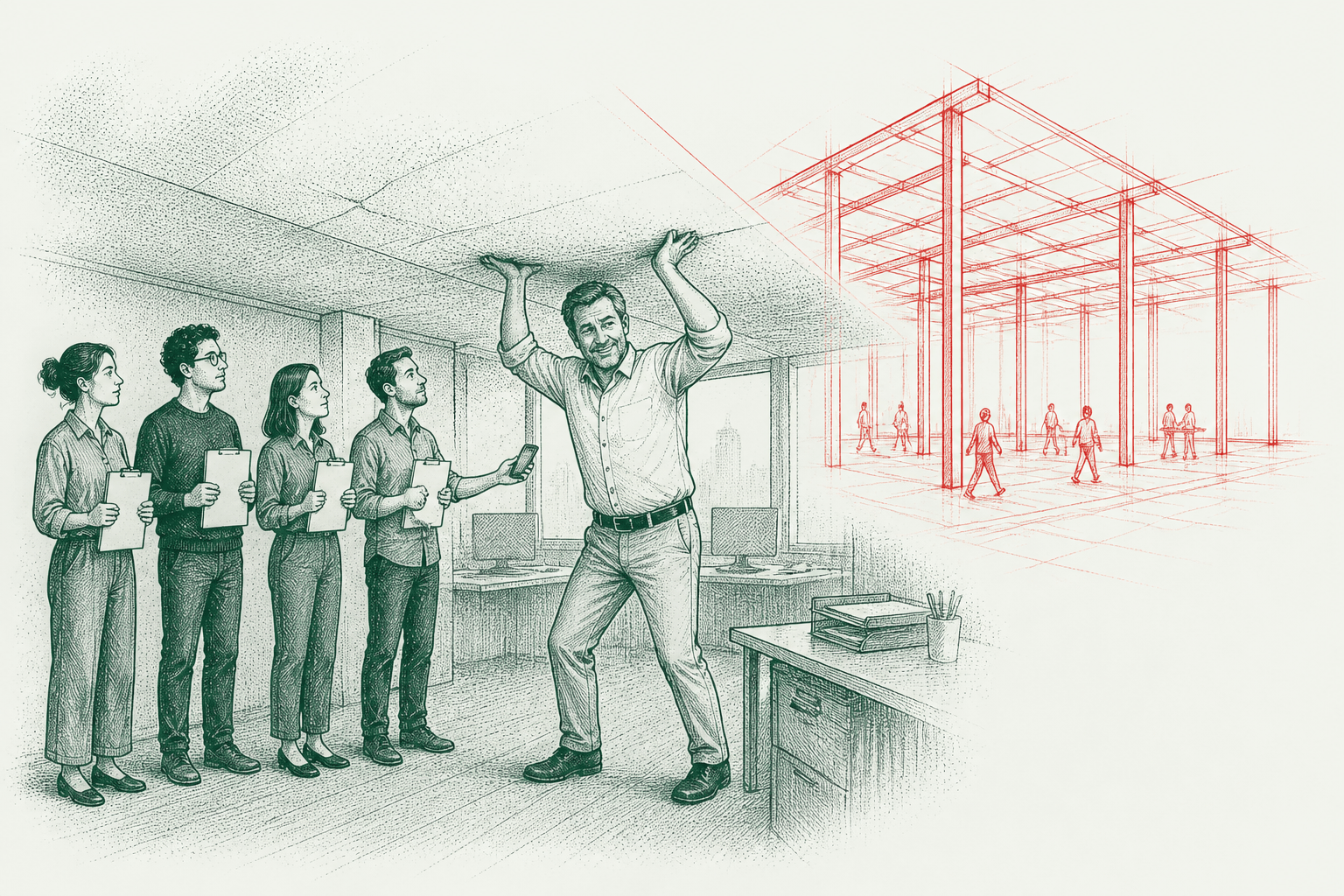
Getting out from under the ceiling, in ten days
A succession pilot anyone can run without stopping the business — one role, one workflow, one measurable result. Swipe through.
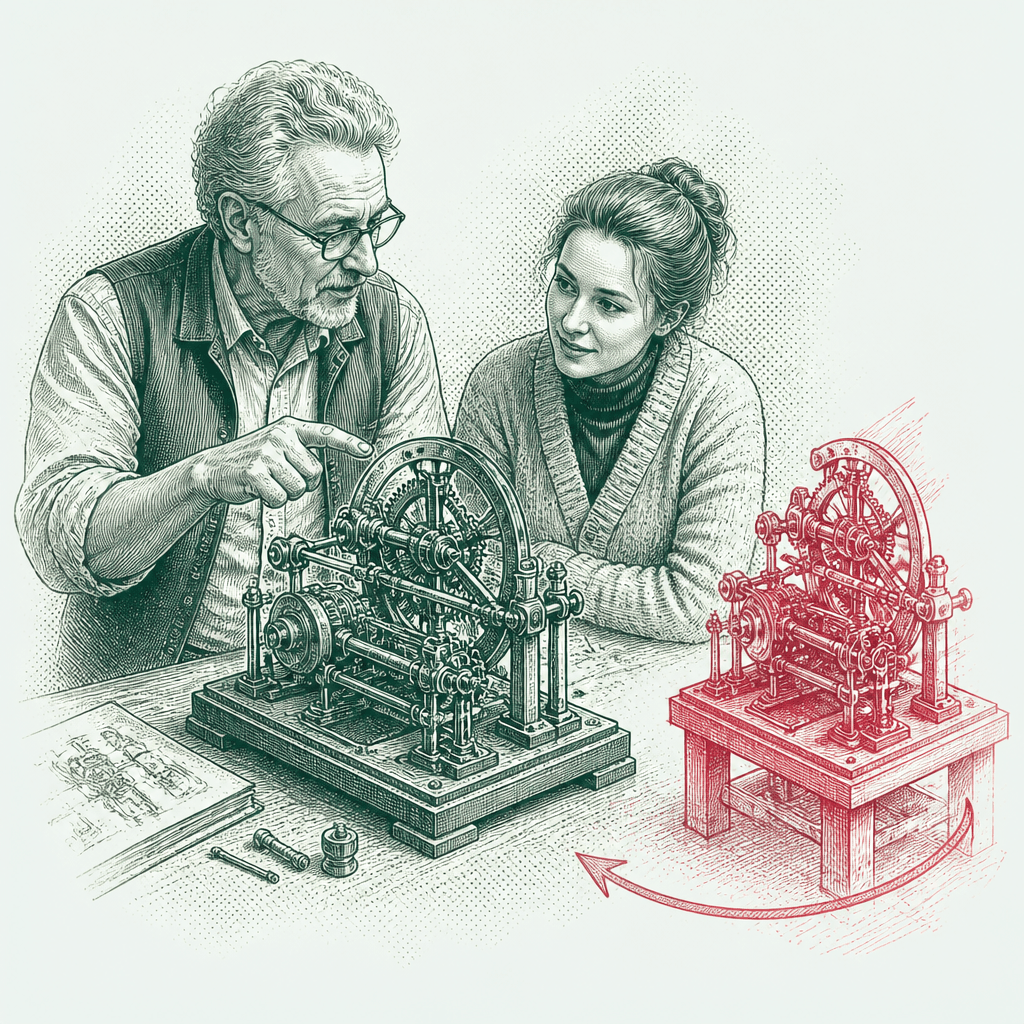 The knowledge doesn’t leave — it stops being trapped in one person.
The early warning signs you’re at the ceiling.
The pattern is recognisable long before it’s painful. Count how many of these are true this quarter:
- Everything breaks when you go on holiday
- One urgent job takes ten phone calls to coordinate
- New staff take months to become useful, because the training is a person, not a system
- Growth feels chaotic rather than controlled
- Service quality dips every time you get busy
- You are the bottleneck in every decision
- Weekend work has quietly become normal
Any two of these is a signal. Four or more means the ceiling is already overhead — and the cost isn’t just burnout. It’s missed opportunities, an inconsistent customer experience, and a business worth less than it should be, because too much of it lives in your head.
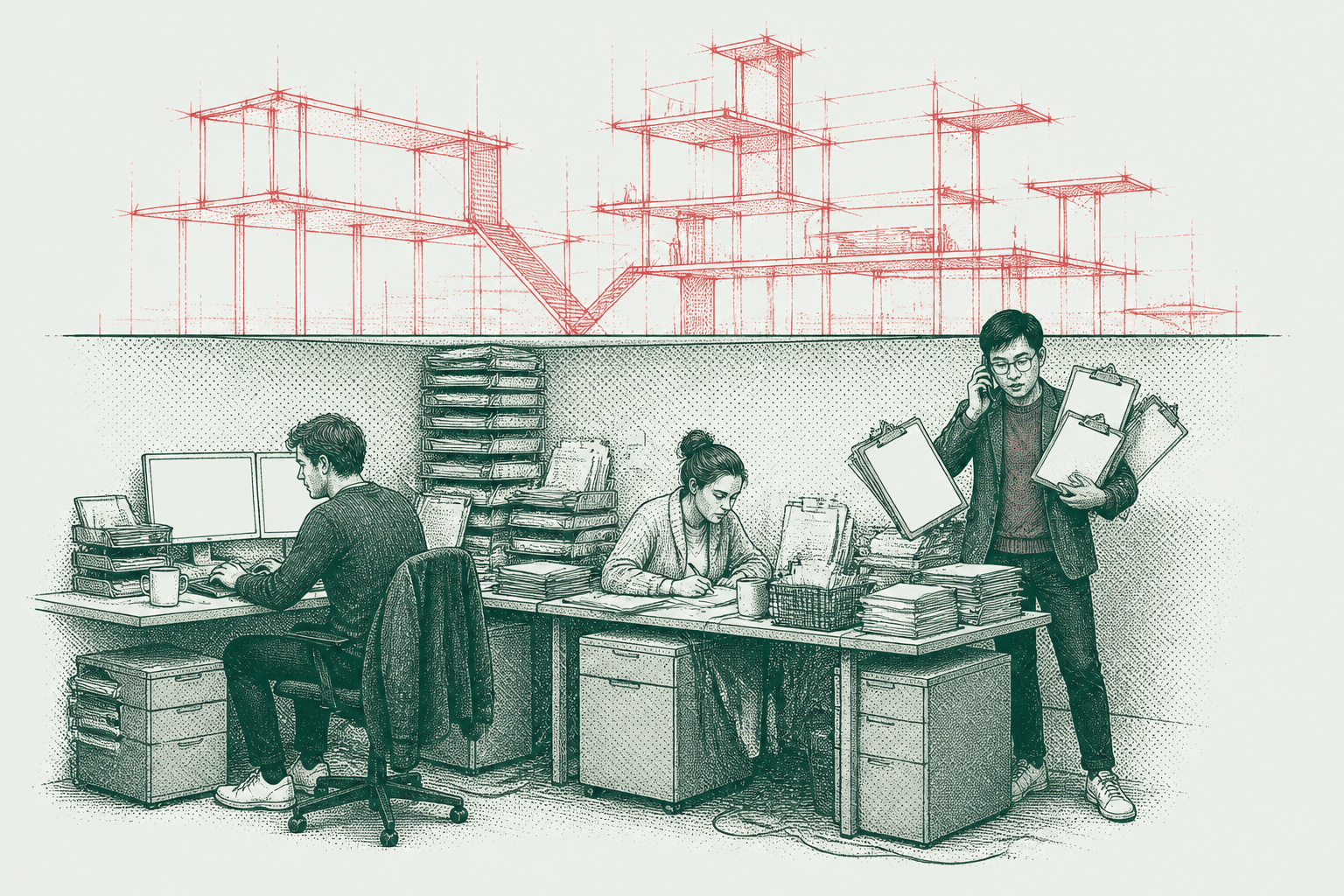
The scaling myth: systems scale automatically. They don’t. Your coordination methods work brilliantly at ten customers and catastrophically at fifty — human talent doesn’t scale like software. Read The Scaling Paradox →
Two answers to the same growing pain.
Add more people
Scales complexity- More handoffs, more context to share
- More decisions through the same bottleneck
- Meeting count rises with headcount
- Every hire feels like progress, adds coordination
- The ceiling stays exactly where it was
Remove decisions
Scales capability- Coordination built into systems, not calendars
- Work designed to manage itself
- Meeting count falls as the business grows
- Each build removes a category of interruptions
- The ceiling moves up with every layer
More people is not scale. Fewer decisions is scale — the businesses that break through the ceiling systematically remove decision points from routine work.
Why capability compounds while efficiency adds
Simple process automation makes existing tasks faster — worthwhile, but linear. True capability building opens the door to being able to do more: each layer creates possibilities that weren’t available before it existed. A back office that runs itself makes room for customers to serve themselves; customers serving themselves makes room for a market you couldn’t previously reach. That’s compounding, and it’s why the long game wins by more every year it runs.
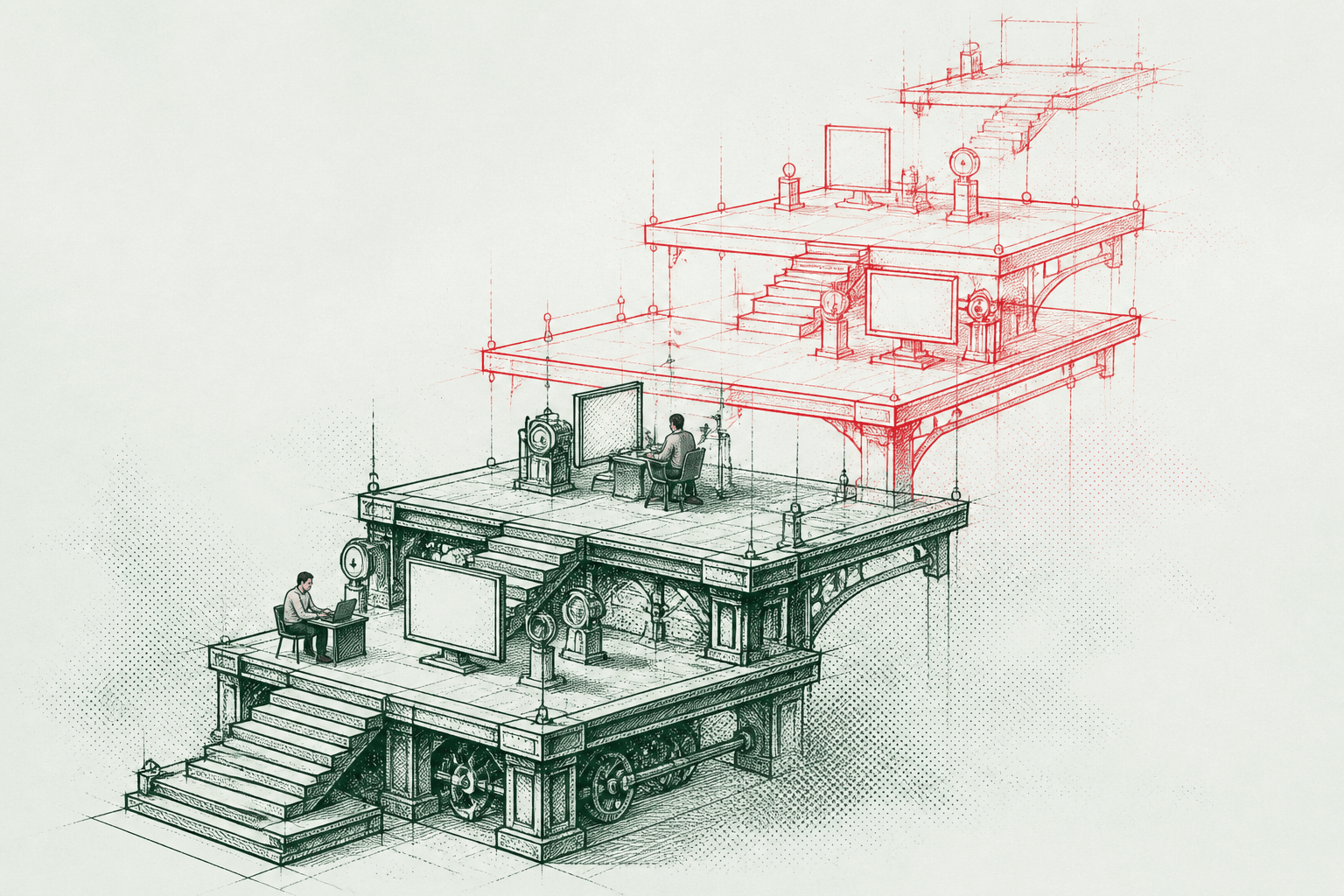
Each layer stands on the one before it.
Sequence is the strategy. Do you build customer acquisition first to earn supplier leverage, or supplier relationships first to attract customers? The order you build in determines which capabilities unlock others — which is why the long game is played with a roadmap, not a wish list.
And a roadmap is never finished, only extended. The idea that you build a system once and move on is the most expensive myth in software — lasting systems are investments that evolve, not projects that end. What that evolution buys you is growth without proportional overhead: revenue that climbs while coordination effort doesn’t.
Why the endgame is bigger than operations
Here is the quiet payoff of the long game: a business that runs on capability rather than memory is worth more to everyone. Worth more to you while you own it — calmer weeks, real holidays, growth that doesn’t require heroics. And worth more to whoever comes next, because what a buyer pays for is precisely the business’s ability to run and grow without its owner. A valuation is just an audit of capability.
The value argument, in two essays
What the long game does to the number at the bottom of the page.
Essay
Maximising Company Value: Build a Business That Runs Without You
Everything a buyer wants from your business is something worth having while you own it — build as if you’ll sell, and you win either way.
Read →Essay
Increasing Company Valuation Through Strategic Software Development
Capability is an asset on the balance sheet of your company’s future — and it’s one you can deliberately build.
Read →
Where it starts
The long game isn’t started with a grand gesture. It’s started with one small win that proves value, banks belief, and lays the first layer everything else stands on.
Start here: Where to start — small wins that prove value → All insights → Book a conversation →