The Spreadsheet That Runs the Business
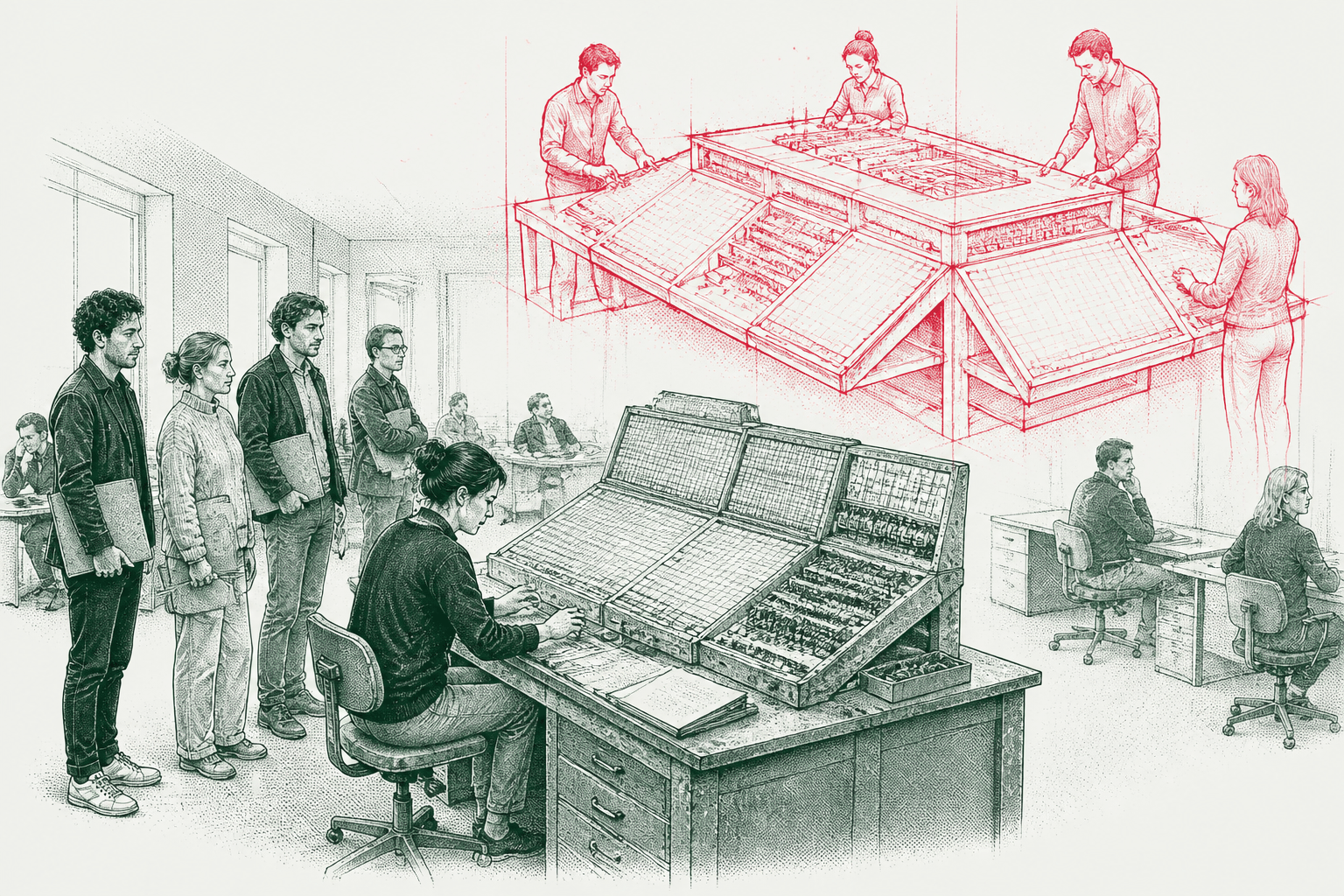
There is a file. It has a version number in its name, or a date, or somebody’s initials. It has tabs nobody opens and formulas nobody has audited since the person who wrote them was doing something else for a living. Everyone knows it matters. Nobody wants to be the one who breaks it.
Ask what would happen if it were lost tomorrow and the room goes quiet in a particular way — not because the answer is unknown, but because saying it out loud makes the situation sound worse than everyone has agreed to treat it.
Why the spreadsheet exists, and why that is to your credit
The spreadsheet is not a failure of discipline. It is the opposite. Somebody in your business understood a problem well enough to solve it with the tools they had, and then kept refining that solution for years while everyone else got on with their work.
The consultant who plans retail catalogues is the pure version of this. His files weigh gross margins against stock position against how customers responded last cycle, and they answer in an afternoon a question that would take an analyst weeks. Ask him what he does and he says he plans catalogues. He thinks of the spreadsheets as his process — the way he happens to work — rather than as the productised methodology they plainly are.
That is the usual shape of it. The most valuable thing in the business is the thing its owner has stopped noticing, because to them it isn’t an achievement. It’s Tuesday.
Why it is the best map you will ever get
Here is the practical reason to take the spreadsheet seriously rather than merely worrying about it: it is already a specification. Someone has done the hardest part of capability building — working out what actually matters, in what order, with which exceptions — and left the answer in a file.
Read it properly and you find the business’s real logic, as opposed to the logic in the process documentation. The columns tell you what information the decision genuinely needs. The formulas tell you the rules, including the ones nobody could articulate in a workshop. And the manual overrides tell you where judgement still lives — those cells are the most valuable thing in the file, because they mark the boundary between what has been solved and what is still carried by a person.
Any capability build worth doing starts from that boundary rather than from a blank page.
Why the real risk is not the file
The obvious risk is loss: the file corrupts, the laptop dies, a formula silently breaks and three months of decisions are quietly wrong. Those are real, and they are the ones that get discussed.
The larger cost is a ceiling. While the knowledge lives in a spreadsheet operated by one person, your capacity to use it is capped by that person’s calendar. Every client who needs it has to queue. Every colleague who could apply it has to interrupt. Growth means either cloning them or accepting a worse answer for everyone who can’t reach them.
Bright Finance is the recognisable version. Manual processes and cumbersome spreadsheets absorbed the time of advisers whose value was advice, not data entry. The build didn’t make the spreadsheets faster — it moved the routine work to where it belonged, with clients entering their own information, which returned the expertise to the thing only expertise could do.
What to do on Monday
Don’t start by replacing it. Start by listing them: which spreadsheets are critical to operations, what each one does, and who genuinely understands it. Most businesses find between three and six, and are mildly alarmed by how often the same name appears in the third column.
Then take the one with the highest stakes and the fewest people who understand it, and sit with that person while they explain not what the file does but how they decide — the thresholds, the exceptions, what makes them override the number. Write it down as prompts and rules, and keep it short.
You have now done something more valuable than any migration. You have moved a piece of the business out of one person’s head and into the business itself, and you can see clearly, probably for the first time, what it would take to give that judgement to everyone who needs it.
The file was never the problem. It was the evidence.